How to Compare Assisted Living Homes for Quality Senior and Elderly Care
Business Name: BeeHive Homes of Amarillo
Address: 5800 SW 54th Ave, Amarillo, TX 79109
Phone: (806) 452-5883
BeeHive Homes of Amarillo
Beehive Homes of Amarillo assisted living is ideal for those who value their independence but require help with some of the activities of daily living. Residents enjoy 24-hour support, private bedrooms with baths, medication monitoring, home-cooked meals, housekeeping and laundry services, social activities and outings, and daily physical and mental exercise opportunities. Beehive Homes memory care services accommodates the growing number of seniors affected by memory loss and dementia. Beehive Homes offers respite (short-term) care for your loved one should the need arise. Whether help is needed after a surgery or illness, for vacation coverage, or just a break from the routine, respite care provides you peace of mind for any length of stay.
5800 SW 54th Ave, Amarillo, TX 79109
Business Hours
Choosing an assisted living home is among those decisions that feels both useful and deeply personal. You are not simply comparing floor plans and fees. You are deciding who will observe when Mom skips a meal, who will stroll next to Dad on the slick sidewalk after rain, who will call you at midnight if something is incorrect.
Having strolled families through this process for several years, I have actually seen how overwhelming it can be initially. The bright side is that quality in senior care is visible once you know where to look. It shows up in personnel habits, in how residents spend their afternoons, in how rapidly a call light is addressed, and even in the odor when you walk through the door.
This guide concentrates on how to compare assisted living homes in a grounded, useful method, consisting of how to think of respite care, longer term senior care, and complex elderly care needs.
Start with a clear photo of needs, not buildings
Most households begin by touring neighborhoods and looking at design. The better starting point is a completely sincere conversation about requirements, dangers, and preferences.
Ask yourself, and your loved one if they can get involved meaningfully: What exactly do they need aid with right now? And what is likely to change over the next 1 to 3 years?
Activities of everyday living are a simple framework. Do they need cuing or hands-on assistance with bathing, dressing, toileting, moving, eating, or managing medications? Someone who only needs light pointers can flourish in a really various setting from someone who requires assist with standing securely or handling incontinence.
Look beyond physical needs. Cognitive concerns such as mild memory loss, confusion in the evening, or trouble following multi-step guidelines affect what type of assisted living will work. An individual with early dementia may do well in a small, structured community, while somebody with significant wandering or exit-seeking behavior might require a protected memory care environment rather of general assisted living.
Finally, tease out preferences that are more than "good to have." Does your father illuminate in a small, quiet group, or does your mother gain energy from a busy social calendar? An inequality here does not show up on the first tour, however it matters a lot in the long run.
If requirements doubt, consider a period of respite care initially. A brief remain in a community, typically two to 6 weeks, can be a lower-risk method to see how your loved one functions with staff support and how the home actually runs day to day.
Understanding levels of care: assisted living, respite care, and beyond
The phrases "assisted living," "independent living," and "nursing home" get used loosely, and state policies vary, so it assists to clarify what each generally means.
Assisted living typically supplies real estate, meals, aid with personal care, medication management, and social activities for adults who do not require 24-hour nursing supervision. Many communities can deal with moderate levels of physical and cognitive problems, but there is a limit. They are not health centers, and they are shortly term acute care facilities.
Respite care is short-term senior care, frequently inside an existing assisted living or skilled nursing center. Households use it when a main caregiver requires a break, is recovering from surgical treatment or health problem, or wishes to "check drive" communal living for a loved one. The crucial thing with respite is to ensure the same staffing, services, and safety standards apply to respite homeowners as to long-term homeowners. A respite stay need to not feel like being a visitor on the margins.
Memory care is a special subset of assisted living or residential care designed for people with Alzheimer's illness or other dementias. Staff training, constructing design, and day-to-day routines are customized to cognitive problems. Not every elderly care neighborhood has real memory care, even if they state they "can manage dementia," so ask particularly about dedicated programs and protected units.
Skilled nursing centers (nursing homes) supply 24-hour nursing care and more complex medical management. Some assisted living companies will describe themselves as "aging in place" communities, indicating a resident can stay there as requirements increase. Ask what happens when someone needs two-person transfers, nighttime incontinence care, or advanced injury management. The response informs you where the real line is between assisted living and experienced nursing because setting.
Understanding these differences upfront assists you compare the ideal kinds of homes, instead of falling for a location that can not safely satisfy your loved one's future needs.
Building a practical shortlist
The web makes it simple to pull a list of choices, however online evaluations for senior care need to be checked out with caution. They tend to overrepresent extremely pleased and mad households and typically reflect a single minute in time, not the constant reality.
Start by filtering based on non-negotiables: place relative to essential relative, spending plan variety, whether they can manage particular medical conditions (for example, insulin-dependent diabetes, oxygen usage, or substantial movement limits), and whether they use respite care if that belongs to your plan.
Next, talk with specialists who see many facilities, not simply one. Health center discharge organizers, geriatric social workers, and home health nurses understand which places send homeowners back to the hospital frequently, which ones communicate well, and which ones appear chronically brief staffed. Their casual opinions are typically more precise than shiny marketing.
When you call each neighborhood, pay attention to how that first discussion feels. Do you consult with someone who listens, asks excellent follow-up questions, and gives specific answers, or somebody who checks out from a script and welcomes you to "come tour" before attending to any concerns? The way the front workplace treats you as a prospective client often mirrors how they deal with families when problems arise.
Aim for three to 5 neighborhoods on your shortlist. That is normally enough to see real distinctions without burning yourself out.
What to try to find on the very first visit
A tour is not almost seeing the rooms. It is your opportunity to observe the culture, staffing, and day-to-day rhythm of the place.

Try to get here a little early and sit in the lobby or typical location. Watch interactions before anybody knows you are on a tour. Are staff welcoming homeowners by name? Do citizens look engaged, or do they appear parked in front of a television? A community that feels alive at 2 p.m. On a random weekday frequently has its act together.
Smell matters. A faint smell of cleaning products or occasional bathroom odor is normal in elderly care settings. A pervasive urine odor or heavy air freshener masking something even worse usually shows chronic understaffing or lax housekeeping.
Ask to see not just the best design unit but also a room currently occupied, with the resident's permission. Search for practical details: grab bars in the right locations, shower style that supports someone who is unsteady, emergency call systems reachable from bed and bathroom, and thermostats citizens can control.
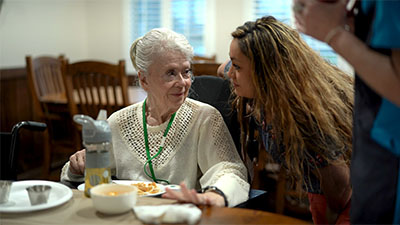
Meals are central to lifestyle in assisted living. If possible, visit throughout a meal and sit with homeowners. Notice portion sizes, whether food looks appealing, and whether staff help with dignity with cutting food or opening containers. Ask locals what occurs if somebody does disappoint as much as meals. In a well-run neighborhood, staff check-in patterns catch these modifications early.
Activities calendars inform one story. The real activity room frequently tells another. Pop your head in throughout an activity. Are 3 people sitting silently while a staff member half-heartedly skims a book, or exists genuine engagement aligned with homeowners' capabilities? People with arthritis might not desire arts and crafts however may enjoy discussion groups or simple card games. Real senior care adapts activities to who lives there, not the other method around.
A focused pre-visit checklist
Used briefly and thoughtfully, a simple list can keep you from missing basics during the tension of touring.
- Confirm they can fulfill your loved one's existing medical, movement, and cognitive needs, consisting of any special concerns such as roaming, oxygen, or complex medications.
- Ask for base rates, care level fees, and what is included in each, then compose them down for later contrast.
- Check licensure status and the date of the most current state study or inspection, and ask if there were any major deficiencies.
- Clarify whether they accept short-term respite care, long-term locals, or both, and whether care expectations differ in between them.
- Schedule your visit at a time when routine activities occur, not throughout staged occasions or open houses.
Staffing: the foundation of quality care
Nice paint and chandeliers do not help if there are not enough experienced hands on the floor. When comparing assisted living homes, staff levels and stability are more predictive of excellent elderly care than amenities.
Ask openly about staffing ratios. Laws differ, and lots of communities will not price quote tough numbers, but they should be able to describe normal staffing on days, nights, and nights for your loved one's care area. If they evade the concern or give just unclear responses like "we staff to fulfill needs," that is a mild warning sign.
Pay attention to how direct care personnel connect with citizens. Look for eye contact, considerate language, and gentle physical cues. If someone calls citizens "feeders" or "two-persons" within your earshot, that is the culture speaking, not just an individual.
Tenure matters. A structure where the nurse has been there for 6 years, the activities director for 4, and numerous aides for more than two years has actually discovered methods to keep people. High turnover leads to inconsistent care and missed information, especially when subtle changes in habits might be the very first indication of infection or medication side effects.
Ask what sort of training staff receive on dementia, fall avoidance, and managing tough habits. A community that cares about senior care beyond fundamental jobs will buy ongoing education, not just a single orientation day.
Safety, health, and medical oversight
Even in assisted living, medical problems develop daily. The concern is not whether your loved one will require help, but how quickly and thoughtfully the community will respond.
Ask who is on website and when. Some centers have actually registered nurses only during weekday service hours, with on-call protection during the night. Others have accredited nurses on website 24/7. For someone with complex conditions or a history of frequent hospitalizations, 24-hour nursing is worth the additional cost.
Clarify how medications are handled. Do nurses or trained medication assistants manage administration? How are new orders communicated from physicians, and how are errors reported and managed? When mistakes take place, you desire a team that is truthful, regretful, and focused on preventing a repeat.
Falls are among the most common emergencies in elderly care. Inquire about their fall prevention program. Do they evaluate each resident's risk, adjust environments, and follow up after a fall with changes to the care strategy, or do they just record and move on? Request concrete examples, not simply assurances.
Finally, understand how they interact with families about health modifications. Some communities phone families for each minor occurrence, which can be overwhelming but comforting. Others only require major occasions. You will want to know which style fits your expectations and how versatile they can be.
The feel of every day life: autonomy, self-respect, and routine
Good assisted living is not simply safe, it supports a meaningful life. As you compare neighborhoods, take notice of how they handle choice and dignity.
Residents ought to have real input into daily regimens. Ask whether individuals can choose what time they get up, when they bathe, and whether they can opt out of activities without pressure. A rigid schedule is simpler for staff, however it typically erodes a sense of self for residents who have led independent lives for decades.
Dignity displays in small information. How do staff manage incontinence care? Do they knock and wait before entering rooms? Are grooming and clothes options appreciated? An older female who always wore jewelry must not unexpectedly look unkempt due to the fact that staff do not have time or interest to assist her maintain that part of her identity.
Food versatility is another key piece. Are there alternatives if someone does not like the primary entrée, and can they accommodate special diet plans without making the resident feel like a burden? Senior care that deals with meals only as fuel misses an essential social and psychological anchor.
Look likewise at how residents move through the structure. Are they easily strolling, sitting in different lounges, talking with each other, or primarily isolated in their rooms? Communities that support casual event spaces and motivate gentle movement frequently have less behavioral issues and much better total mood.
Financial clarity and long-term sustainability
Cost frequently becomes the hardest part of the decision as soon as you discover a place you like. Assisted living pricing can be stealthily complicated, and households are in some cases surprised by how quickly charges rise as care needs increase.
Most operators structure costs with a base rate for housing and fundamental services, plus tiered care levels. Ask for written descriptions of each level and the requirements utilized to assign them. Then ask how typically care levels are reassessed, and how they inform families of modifications. A sudden jump from one level to another can add hundreds or thousands of dollars per month.
If your loved one might ultimately rely on Medicaid or other public advantages, ask whether the neighborhood accepts these, and under what conditions. Some locations accept Medicaid only after a private-pay period of a year or more. Others do decline it at all, which implies a relocation may be required when funds run low.
For respite care, understand whether the daily or weekly rate truly includes all services your loved one will require. Some facilities quote a relatively low respite rate that excludes medication management or greater levels of support, then add substantial charges when the stay begins.
It helps to forecast costs over at least 3 years, taking into consideration most likely increases in care requirements, normal annual rate hikes, and for how long existing funds might last. A slightly less elegant neighborhood that your family can afford for numerous years often makes more sense than a beautiful setting that forces a disruptive relocation after 18 months.
Red flags that deserve your attention
Every community will have flaws. The objective is not to find a perfect place, but to differentiate workable quirks from serious problems. Specific patterns tend to indicate much deeper issues.
- Staff speak negatively about homeowners or other staff in front of you, or you overhear frequent arguing or complaints at the front desk.
- Residents repeatedly press call buttons that go unanswered for extended periods, or you see hazardous situations (wet floors, chaotic hallways) left unaddressed.
- Leadership prevents direct answers about surveys, citations, or complaints, or ends up being defensive when you ask comprehensive concerns about care.
- The activities calendar looks appealing, however during your visit you see little or no genuine engagement, with most homeowners sitting idle.
- You feel hurried, pushed to sign quickly, or dissuaded from talking with existing citizens or households without staff present.
If two or more of these show up consistently, deal with that as significant data, regardless of how impressive the structure looks.
Small versus big communities: compromises to consider
Families frequently ask whether a smaller "board and care" design home or a larger assisted living building is much better. The answer depends upon your loved one's personality, requires, and what matters most to you.
Smaller homes, often licensed for 6 to ten homeowners, can feel more like a traditional home. Personnel understand everybody totally, and routines are often versatile. For someone who gets easily overwhelmed by sound and crowds, this can be ideal. However, smaller homes may have less structured activities and restricted on-site medical oversight.
Larger neighborhoods typically use wider activity programs, on-site features such as beauty salons or therapy gyms, and a broader mix of peers. Extroverted residents or those who delight in group events frequently prosper in these environments. The compromise is that it can feel institutional, and without strong leadership, people might get lost in the crowd.
When comparing, attempt to picture your loved one on a quiet Tuesday afternoon, not throughout a holiday celebration. Where would they feel more at ease, more themselves? That psychological picture can assist cut through marketing and focus on fit.
Using respite care as a trial run
If you are deeply unsure, a brief respite care stay in your top option can be important. It offers your loved one a possibility to experience assisted living without a full dedication and offers you a clearer window into everyday operations.
Approach respite as a major test, not a trip. Supply precise medical information, normal regimens, and behavior patterns. Check how personnel adapt to those information, how they record changes, and how they interact with you throughout the stay. If staff appear continuously shocked by details you shared at admission, that informs you about internal interaction, not just a single missed out on note.
Pay attention to your loved one's feedback, even if it is filtered through cognitive disability. "They never ever come when I call" or "I am lonely here" may reflect real concerns, or it may show the uncomfortable modification of leaving home. Probe carefully, ask specifics, and compare what you hear with your own observations and staff reports.
Sometimes families discover that the care is outstanding, however the timing is incorrect and self-reliance senior care BeeHive Homes of Amarillo can continue safely at home for a while longer. Other times, a hesitant parent blossoms with brand-new good friends and structure. Either way, you are choosing based on lived experience, not simply tours.
Pulling it together: how to compare once you have toured
After you have actually checked out a few communities, information blur. Create a basic record for each location: what you saw, what personnel said, what locals told you, how your gut felt. Include both practical points such as pricing and care capacity, and softer impressions such as warmth, sound level, and general energy.
Reflect on a couple of guiding concerns:
Which place did I feel comfortable leaving my loved one alone in, at 9 p.m. On a rainy night?
Where did I see personnel acting in methods I would be happy to see my own household mimic? Which community appeared most sincere about what they can not do, not just what they can? 
Often, a pattern emerges. One neighborhood might be clearly more powerful clinically but weaker socially. Another may feel warm and pleasant, but battle with higher-acuity citizens. There is seldom a best match. Rather, you choose the very best balance of safety, dignity, social connection, and sustainability for your situation.
When you find that balance, assisted living can be even more than a place to live. It can be a setting where senior care specialists support your loved one's self-reliance, where respite care gives family caregivers real rest, and where elderly care is not simply a service, but a relationship.
Taking the time to compare thoughtfully is one of the best gifts you can provide both your loved one and yourself.
BeeHive Homes of Amarillo provides assisted living care
BeeHive Homes of Amarillo provides memory care services
BeeHive Homes of Amarillo provides respite care services
BeeHive Homes of Amarillo supports assistance with bathing and grooming
BeeHive Homes of Amarillo offers private bedrooms with private bathrooms
BeeHive Homes of Amarillo provides medication monitoring and documentation
BeeHive Homes of Amarillo serves dietitian-approved meals
BeeHive Homes of Amarillo provides housekeeping services
BeeHive Homes of Amarillo provides laundry services
BeeHive Homes of Amarillo offers community dining and social engagement activities
BeeHive Homes of Amarillo features life enrichment activities
BeeHive Homes of Amarillo supports personal care assistance during meals and daily routines
BeeHive Homes of Amarillo promotes frequent physical and mental exercise opportunities
BeeHive Homes of Amarillo provides a home-like residential environment
BeeHive Homes of Amarillo creates customized care plans as residents’ needs change
BeeHive Homes of Amarillo assesses individual resident care needs
BeeHive Homes of Amarillo accepts private pay and long-term care insurance
BeeHive Homes of Amarillo assists qualified veterans with Aid and Attendance benefits
BeeHive Homes of Amarillo encourages meaningful resident-to-staff relationships
BeeHive Homes of Amarillo delivers compassionate, attentive senior care focused on dignity and comfort
BeeHive Homes of Amarillo has a phone number of (806) 452-5883
BeeHive Homes of Amarillo has an address of 5800 SW 54th Ave, Amarillo, TX 79109
BeeHive Homes of Amarillo has a website https://beehivehomes.com/locations/amarillo/
BeeHive Homes of Amarillo has Google Maps listing https://maps.app.goo.gl/avxAXn336jPCWXwv7
BeeHive Homes of Amarillo has Facebook page https://www.facebook.com/BeehiveAmarillo/
BeeHive Homes of Amarillos has YouTube channel https://www.youtube.com/@WelcomeHomeBeeHiveHomes
BeeHive Homes of Amarillo won Top Assisted Living Homes 2025
BeeHive Homes of Amarillo earned Best Customer Service Award 2024
BeeHive Homes of Amarillo placed 1st for Senior Living Communities 2025
People Also Ask about BeeHive Homes of Amarillo
What is BeeHive Homes of Amarillo Living monthly room rate?
The rate depends on the level of care that is needed. We do an initial evaluation for each potential resident to determine the level of care needed. The monthly rate is based on this evaluation. There are no hidden costs or fees
Can residents stay in BeeHive Homes of Amarillo until the end of their life?
Usually yes. There are exceptions, such as when there are safety issues with the resident, or they need 24 hour skilled nursing services
Does BeeHive Homes of Amarillo have a nurse on staff?
No, but each BeeHive Home has a consulting Nurse available 24 – 7. if nursing services are needed, a doctor can order home health to come into the home
What are BeeHive Homes of Amarillo visiting hours?
Visiting hours are adjusted to accommodate the families and the resident’s needs… just not too early or too late
Do we have couple’s rooms available?
Yes, each home has rooms designed to accommodate couples. Please ask about the availability of these rooms
Where is BeeHive Homes of Amarillo located?
BeeHive Homes of Amarillo is conveniently located at 5800 SW 54th Ave, Amarillo, TX 79109. You can easily find directions on Google Maps or call at (806) 452-5883 Monday through Sunday 9:00am to 5:00pm
How can I contact BeeHive Homes of Amarillo?
You can contact BeeHive Homes of Amarillo Assisted Living by phone at: (806) 452-5883, visit their website at https://beehivehomes.com/locations/amarillo, or connect on social media via Facebook or YouTube
Amarillo Botanical Gardens provide beautiful plant displays and tranquil paths that enrich assisted living, memory care, senior care, elderly care, and respite care outings.